The Invisible Green Hand: 5 Ways Nuclear Science is Quietly Saving Our Planet
1. The Nuclear Paradox: A Systemic Shift in Environmental Defense
When we think of nuclear technology, the mind often conjures images of massive cooling towers or the high-stakes debates of the energy sector. Yet, away from the headlines, a quieter revolution is occurring—one where the atom serves as our most precise ally in planetary healing. This is the realm of Integrated Environmental Management, a sophisticated framework that moves beyond simple power generation to view nuclear science as a systemic tool for remediation, prevention, and monitoring.
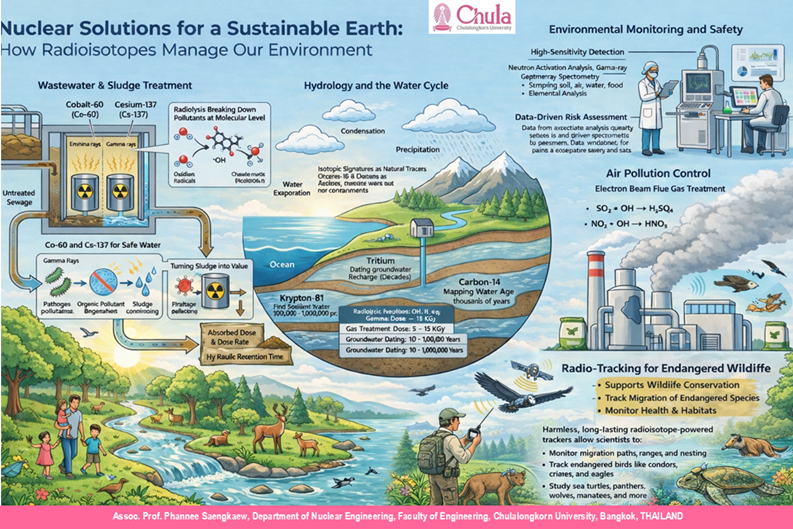
To understand this shift, we must look at the technology through three systemic levels: the Process Level (remediating pollutants), the Monitoring Level (high-sensitivity detection), and the System Understanding Level (mapping global cycles). By hijacking the very chemistry of the environment at a molecular level, scientists are transforming how we protect our biodiversity and manage our dwindling resources.
2. Turning Industrial Smog into “Agricultural Gold”
In the battle against air pollution, nuclear science doesn’t just filter toxins; it “hijacks” the chemistry of industrial exhaust. Traditional coal and gas plants release sulfur dioxide (SO2) and nitrogen oxides (NOx, including NO2), the primary architects of acid rain. However, through Electron Beam Flue Gas Treatment, these pollutants are subjected to an intensive “Process Level” transformation.
The process begins when an electron beam is fired into the gas stream, triggering the radiolysis of water vapor. This creates highly reactive hydroxyl radicals •OH with immense oxidizing potential. These radicals instantly convert toxic gases into sulfuric and nitric acids:
SO₂ + •OH → H₂SO₄
NOₓ + •OH → HNO₃
The “aha!” moment for the circular economy occurs when ammonia (NH3) is introduced. The acids are neutralized, crystallizing into solid ammonium sulfate and ammonium nitrate—high-grade fertilizers.
The Outcome: A hazardous pollutant is literally re-engineered into (NH4)2SO4, turning a factory’s “smog” into a resource for global food security.
3. The Molecular “Mop”: Disinfecting Water with Gamma Rays
Dealing with complex hospital and community wastewater requires more than a simple filter; it requires a molecular intervention. By utilizing Cobalt-60 (60Co) and Cesium-137 (137Cs), engineers employ gamma radiation to act as a “molecular mop.”
While the radiation provides a Direct Action by shattering the DNA of pathogens, the real magic lies in the Indirect Action known as the Radiolysis of Water. The radiation turns the water itself into a cleaning agent by producing a cocktail of reactive species:
H₂O → •OH + •H + 
These species, particularly the hydroxyl radicals and hydrated electrons ( 
4. Reading “Isotopic Fingerprints” of Migrating Wildlife
Tracking endangered sea birds across the trackless expanse of the ocean was once a logistical nightmare. Today, scientists use atoms to bridge the gap between the molecular level and the System Understanding Level. This is made possible through isotopic signatures.
Every geographic region leaves a unique “fingerprint” in the water and food chain, defined by ratios of isotopes like Tritium (3H), Oxygen-18 (18O), and Deuterium (2H). As a bird migrates, its tissues record these natural tracers.
“Because these isotopes move through the environment in predictable ways, a single feather becomes a biological hard drive, allowing us to map macro-scale migration paths and biodiversity health without the need for invasive physical tagging.”
By analyzing these signatures, researchers can see how climate change is shifting traditional routes, providing a high-definition view of how species interact with a changing planet.
5. Time Travel via Atoms: Mapping the Earth’s Water Cycle
In a world facing acute water scarcity, we need to know if the water we pump from the ground is “new” (replenished by rain) or “fossil” (exhaustible). Nuclear hydrology uses isotopes as “atomic clocks” to map the age and movement of water across staggering timescales:
- Tritium (3H): Tracks modern water movement over decades, perfect for monitoring recent recharge.
- Carbon-14 (14C): Measures groundwater age over thousands of years.
- Krypton-81 (81Kr): Peers back hundreds of thousands to millions of years.
- Iodine-129 (129I): The ultimate historian, tracking water systems up to 15 million years old.
This data-driven approach allows governments to manage aquifers sustainably. If we know a water source is a million years old, we know it is a finite treasure, not a renewable tap.
6. The Sentinel Atoms: High-Sensitivity Pollution Detection
At the Monitoring Level, nuclear science acts as the world’s most sensitive detective. Techniques like Neutron Activation Analysis (NAA) and Gamma-ray Spectrometry allow scientists to detect trace-level contaminants in food, air, and soil that are invisible to standard chemistry.
In NAA, samples are bombarded with neutrons, causing stable nuclei to emit characteristic gamma rays. This technique is non-destructive, which is vital for international safety standards; it allows for a legal and forensic “chain of custody” for contaminated samples. To ensure public and ecosystem safety, experts calculate risk using a specific dose formula:
Dose = Activity \times Exposure \times Conversion factor
This mathematical rigor ensures that every sample meets the stringent safety limits defined by the IAEA and ICRP, protecting the health of the entire biological system.
7. Conclusion: A New Atomic Perspective
Nuclear technology is no longer just a power source; it is a systemic necessity for achieving the UN Sustainable Development Goals. It is the primary engine behind SDG 6 (Clean Water and Sanitation) and a critical observer for SDG 13 (Climate Action). By linking the molecular to the macro, these “sentinel atoms” provide the precision needed for a sustainable future.
While the path forward involves significant investment in infrastructure, specialized expertise, and the vital task of building public trust, the potential for planetary healing is undeniable. As we confront the environmental crises of the 21st century, we must ask ourselves: Is our lingering fear of the “atom” preventing us from utilizing our most potent tool for saving the Earth?
************************************************************
5 วิธีที่วิทยาศาสตร์นิวเคลียร์ช่วยปกป้องสิ่งแวดล้อม ช่วยโลกของเราให้เขียวมากขึ้น
1. ความย้อนแย้งของนิวเคลียร์: การเปลี่ยนผ่านเชิงระบบในการปกป้องสิ่งแวดล้อม
เมื่อกล่าวถึงเทคโนโลยีนิวเคลียร์ ภาพที่มักปรากฏในความคิดของผู้คนคือหอหล่อเย็นขนาดใหญ่ หรือการถกเถียงด้านพลังงานที่มีความซับซ้อนสูง อย่างไรก็ตาม นอกเหนือจากภาพจำดังกล่าว กำลังเกิดการเปลี่ยนแปลงที่สำคัญในระดับลึก ซึ่งอะตอมได้กลายเป็นเครื่องมือที่มีความแม่นยำสูงในการฟื้นฟูสิ่งแวดล้อมของโลก
แนวคิดนี้เรียกว่า “การจัดการสิ่งแวดล้อมแบบบูรณาการ” (Integrated Environmental Management) ซึ่งมองเทคโนโลยีนิวเคลียร์ไม่ใช่เพียงแหล่งพลังงาน แต่เป็นเครื่องมือเชิงระบบที่ใช้ในการฟื้นฟู (remediation) การป้องกัน (prevention) และการตรวจวัด (monitoring)
การทำความเข้าใจแนวคิดนี้จำเป็นต้องพิจารณาผ่านสามระดับ ได้แก่ ระดับกระบวนการ (Process Level) ซึ่งเน้นการกำจัดมลพิษ ระดับการตรวจวัด (Monitoring Level) ซึ่งเน้นการตรวจจับที่มีความไวสูง และระดับความเข้าใจระบบ (System Understanding Level) ซึ่งใช้ในการวิเคราะห์วัฏจักรของโลก การควบคุมกระบวนการในระดับโมเลกุลเช่นนี้ช่วยเปลี่ยนวิธีการที่มนุษย์ใช้ในการปกป้องความหลากหลายทางชีวภาพและบริหารจัดการทรัพยากรที่มีจำกัด
2. การเปลี่ยนหมอกควันอุตสาหกรรมให้เป็น “ทรัพยากรทางการเกษตร”
ในการจัดการมลพิษทางอากาศ เทคโนโลยีนิวเคลียร์ไม่ได้เพียงกรองสารพิษ แต่สามารถปรับเปลี่ยนเคมีของก๊าซไอเสียได้โดยตรง โรงไฟฟ้าถ่านหินและก๊าซมักปล่อยก๊าซซัลเฟอร์ไดออกไซด์ (SO₂) และก๊าซไนโตรเจนออกไซด์ (NOₓ) ซึ่งเป็นสาเหตุหลักของฝนกรด
กระบวนการลำอิเล็กตรอน (Electron Beam Flue Gas Treatment) ทำให้เกิดการแตกตัวของไอน้ำในก๊าซ และสร้างอนุมูลไฮดรอกซิล (•OH) ที่มีศักยภาพออกซิไดซ์สูง อนุมูลเหล่านี้จะเปลี่ยนก๊าซพิษให้กลายเป็นกรด
SO₂ + •OH → H₂SO₄
NOₓ + •OH → HNO₃
เมื่อเติมแอมโมเนีย (NH₃) กรดเหล่านี้จะถูกทำให้เป็นกลางและตกผลึกเป็นแอมโมเนียมซัลเฟตและแอมโมเนียมไนเตรต ซึ่งเป็นปุ๋ยคุณภาพสูง
ผลลัพธ์คือ มลพิษทางอากาศถูกแปรสภาพเป็นทรัพยากรที่มีคุณค่า ซึ่งสอดคล้องกับแนวคิดเศรษฐกิจหมุนเวียน
3. “ไม้ถูโมเลกุล”: การฆ่าเชื้อในน้ำด้วยรังสีแกมมา
การบำบัดน้ำเสียจากชุมชนและโรงพยาบาลจำเป็นต้องใช้วิธีที่มีประสิทธิภาพในระดับโมเลกุล เทคโนโลยีนี้ใช้ไอโซโทป เช่น โคบอลต์-60 และซีเซียม-137 เพื่อปล่อยรังสีแกมมา
รังสีทำหน้าที่สองลักษณะ ได้แก่
- การทำลายสารพันธุกรรมของจุลินทรีย์โดยตรง
- การสร้างอนุมูลอิสระผ่านกระบวนการแตกตัวของน้ำ
H₂O → •OH + •H +
อนุมูลเหล่านี้ โดยเฉพาะ •OH และ 
การควบคุมพารามิเตอร์ เช่น ปริมาณรังสี อัตราการให้รังสี และเวลาพักของน้ำ ทำให้สามารถเปลี่ยนของเสียให้เป็นวัสดุปรับปรุงดินได้อย่างมีประสิทธิภาพ
4. การอ่าน “ลายนิ้วมือไอโซโทป” ของสัตว์อพยพ
การติดตามการอพยพของสัตว์ใกล้สูญพันธุ์ เช่น นกทะเล เป็นเรื่องที่ท้าทายอย่างยิ่ง อย่างไรก็ตาม เทคนิคไอโซโทปช่วยให้สามารถติดตามได้โดยไม่ต้องรบกวนสัตว์
แต่ละภูมิภาคมีลักษณะเฉพาะของไอโซโทปในน้ำและอาหาร เช่น ทริเตียม (³H) ออกซิเจน-18 (¹⁸O) และดิวเทอเรียม (²H) เมื่อสัตว์อพยพผ่านพื้นที่ต่าง ๆ สารเหล่านี้จะสะสมในเนื้อเยื่อของสัตว์
ด้วยเหตุนี้ ขนนกเพียงหนึ่งเส้นสามารถใช้เป็น “ฐานข้อมูลชีวภาพ” เพื่อระบุเส้นทางการอพยพและสภาพแวดล้อมที่สัตว์เคยผ่าน ช่วยให้นักวิจัยเข้าใจผลกระทบของการเปลี่ยนแปลงสภาพภูมิอากาศต่อความหลากหลายทางชีวภาพได้อย่างแม่นยำ
5. การเดินทางข้ามกาลเวลา: การศึกษาวัฏจักรน้ำด้วยอะตอม
ในยุคที่ทรัพยากรน้ำมีจำกัด การทราบแหล่งที่มาของน้ำใต้ดินมีความสำคัญอย่างยิ่ง เทคโนโลยีนิวเคลียร์ใช้ไอโซโทปเป็น “นาฬิกาอะตอม” ในการระบุอายุของน้ำ
- ทริเตียม (³H): ใช้ศึกษาน้ำในช่วงไม่กี่ทศวรรษ
- คาร์บอน-14 (¹⁴C): ใช้ศึกษาน้ำระดับพันปี
- คริปตอน-81 (⁸¹Kr): ใช้ศึกษาน้ำระดับแสนถึงล้านปี
- ไอโอดีน-129 (¹²⁹I): ใช้ศึกษาระบบน้ำระยะยาวมาก
ข้อมูลดังกล่าวช่วยให้สามารถบริหารจัดการแหล่งน้ำอย่างยั่งยืน โดยแยกแยะได้ว่าน้ำเป็นทรัพยากรหมุนเวียนหรือทรัพยากรจำกัด
6. อะตอมผู้เฝ้าระวัง: การตรวจจับมลพิษระดับสูง
ในระดับการตรวจวัด เทคโนโลยีนิวเคลียร์ทำหน้าที่เป็นเครื่องมือที่มีความไวสูง เทคนิค เช่น การวิเคราะห์โดยการกระตุ้นด้วยนิวตรอน (Neutron Activation Analysis) และการวิเคราะห์รังสีแกมมา สามารถตรวจจับสารปนเปื้อนในระดับต่ำมาก
ในกระบวนการนี้ ตัวอย่างจะถูกฉายด้วยนิวตรอน ทำให้นิวเคลียสปล่อยรังสีแกมมาเฉพาะตัว ซึ่งสามารถใช้ระบุชนิดของธาตุได้อย่างแม่นยำ
การประเมินความเสี่ยงทางรังสีใช้สมการ
Dose = Activity × Exposure × Conversion factor
ซึ่งช่วยให้สามารถควบคุมระดับความปลอดภัยตามมาตรฐานสากล และปกป้องสุขภาพของมนุษย์และสิ่งแวดล้อม
7. บทสรุป: มุมมองใหม่ของพลังอะตอม
เทคโนโลยีนิวเคลียร์ในปัจจุบันมิได้เป็นเพียงแหล่งพลังงาน แต่เป็นเครื่องมือเชิงระบบที่มีบทบาทสำคัญต่อการบรรลุเป้าหมายการพัฒนาอย่างยั่งยืน โดยเฉพาะด้านน้ำสะอาดและการรับมือกับการเปลี่ยนแปลงสภาพภูมิอากาศ
ความสามารถในการเชื่อมโยงข้อมูลจากระดับโมเลกุลไปสู่ระดับระบบโลก ทำให้เทคโนโลยีนี้เป็นเครื่องมือที่มีความแม่นยำสูงในการแก้ปัญหาสิ่งแวดล้อม
แม้จะต้องเผชิญกับความท้าทายในด้านโครงสร้างพื้นฐาน ความเชี่ยวชาญ และการยอมรับของสังคม แต่ศักยภาพของเทคโนโลยีนิวเคลียร์ในการฟื้นฟูโลกยังคงมีความสำคัญอย่างยิ่ง
ดังนั้น คำถามสำคัญที่ควรพิจารณาไม่ใช่เพียงว่า “เราควรใช้เทคโนโลยีนี้หรือไม่” แต่คือ เราพร้อมหรือยังที่จะใช้เครื่องมือที่ทรงพลังที่สุดในการปกป้องโลกของเรา
 Around Radiation Detectors
ใส่ความเห็น