The Invisible Engine: 5 Surprising Ways Nuclear Technology Powers Our Modern World
Have you ever wondered how engineers inspect the internal structure of a massive oil pipeline buried deep underground, or how a factory ensures every single soda can on a high-speed assembly line is perfectly filled without ever popping a tab? These feats of modern engineering aren’t magic; they are the work of a silent, highly precise force.
While the public often associates nuclear technology exclusively with massive power plants, it is actually the “invisible engine” driving industrial quality, safety, and security. Beyond generating electricity, ionizing radiation serves as an indispensable tool for looking where human eyes cannot. As an innovation columnist, I see these applications as the heartbeat of the 24/7 automated factory—vital sentinels that ensure our modern world remains both efficient and secure.
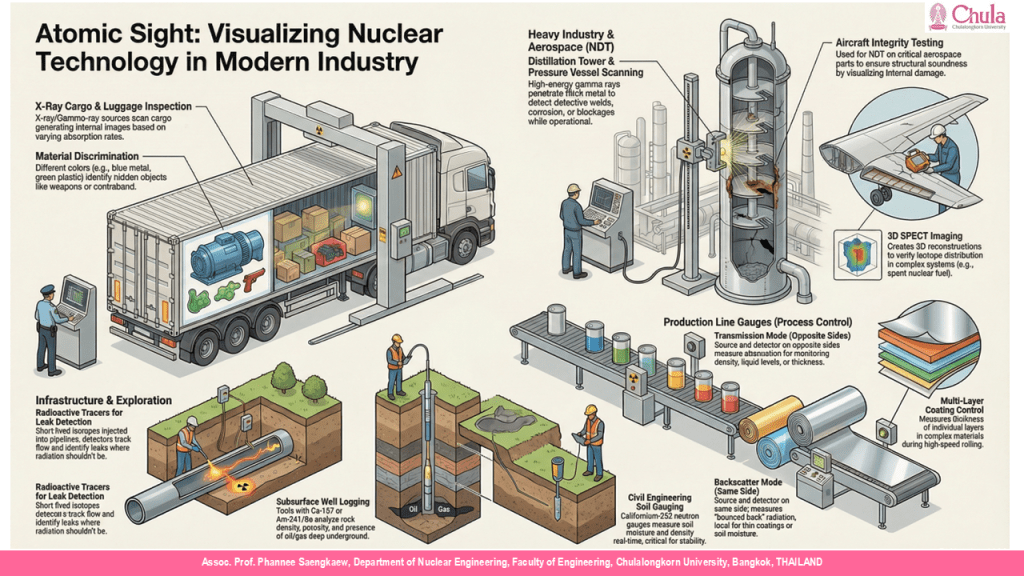
1. X-Ray Vision for Global Logistics
In the high-stakes world of global logistics, opening every suitcase or massive cargo container for manual inspection would bring international trade to a grinding halt. This is where high-energy radiation becomes a game-changer.
Security systems utilize high-energy X-rays and Gamma-ray sources, such as Iridium-192 (Ir-192) or Cobalt-60 (Co-60), to “see” through thick metal walls. The real “innovation” here lies in the physics of absorption. Different materials attenuate—or soak up—radiation at different rates. By measuring these differences, scanners create a detailed image that allows security personnel to distinguish between low-density organic materials (like food or plastic explosives) and high-density metals (like firearms or shielding for illicit materials).
As noted in the industrial context:
“The ability to inspect closed systems without opening or stopping operation… is a major advantage of nuclear technology.”
2. The “Unstoppable Eye” of Non-Destructive Testing (NDT)
Non-Destructive Testing (NDT) is the science of inspecting materials for defects without causing a single scratch of damage. In the petroleum industry, failure is not an option; therefore, Gamma rays are used to inspect the integrity of welds in high-pressure tanks and massive distillation towers while they are in full operation.
Beyond simple 2D imaging, the industry now employs Single Photon Emission Computed Tomography (SPECT). This provides 3D imaging of radioactive distribution within complex systems. By tracking specific fission products like Cesium-137, Barium-140, and Europium-154, SPECT allows the IAEA to safeguard spent fuel assemblies, ensuring no material is diverted for weapons proliferation. The economic impact of NDT is staggering: by providing “real-time” data without requiring a system shutdown, these nuclear tools save industries millions of dollars in potential lost production and prevent the creation of entire batches of “off-spec” waste.
3. Precision Manufacturing: From Paper Thin to Metal Plate
If you’ve ever marveled at the perfect consistency of a sheet of paper or the uniform thickness of a steel beam, you’ve seen the work of nuclear gauges. These devices act as the high-speed regulators of the production line, operating in two distinct modes:
- Transmission Mode: The source and detector are on opposite sides of the material. This is used for Beta gauges (utilizing Kr-85, Sr-90, or Pm-147) to measure thin films and paper, and Gamma gauges (like Cs-137) for heavy plates.
- Backscatter Mode: The detector is placed on the same side as the source to measure radiation bouncing back. This is a crucial innovation for when you only have access to one side of a material—such as measuring a thin plastic coating on a thick metal substrate.
Isotopes like Americium-241 are also essential here, maintaining the precise thickness required in steel rolling and paper manufacturing. By providing instantaneous feedback, these gauges ensure every product meets strict standards with millimetric accuracy.
4. Radioactive “Bloodhounds”: Finding Leaks Underground
When a leak occurs in a vast underground pipeline, traditional repair involves “guess-and-check” excavation—a slow and expensive process. Today, industry uses “Radiotracers” (or industrial radiopharmaceuticals) to find faults with surgical precision.
A common isotope for this is Sodium-24 (Na-24). Engineers inject the isotope into the system to track the flow distribution. By monitoring the radiation signature along the line, they look for a specific drop in the signal at the intended destination; if the signal weakens unexpectedly, it confirms a leak occurred upstream. Detectors then pinpoint exactly where the radiation has escaped into the surrounding soil. This “bloodhound” approach identifies faults deep beneath the surface, eliminating the need for wide-scale digging and massive service disruptions.
5. Building Solid Foundations with Californium-252
Nuclear technology even ensures the stability of the roads we drive on. Californium-252 (Cf-252) serves a niche but critical role as a neutron source in civil engineering. Before a highway is paved or a skyscraper is built, Cf-252 is used to measure the moisture content of the soil. Soil that is too saturated can lead to structural collapse, so knowing these levels in real-time is vital for public safety.
This principle of subsurface exploration extends to the energy sector through Well Logging. Probes containing Cs-137 (for density) or Am-241/Beryllium (for moisture and borehole identification) are lowered into the earth to analyze rock properties. The peak of this innovation is Logging While Drilling (LWD), which allows companies to collect geological data and evaluate resource potential without ever stopping the drill bit.
Conclusion: A Future Built on Invisible Precision
Nuclear technology is far more than a source of power; it is the cornerstone of industrial safety and efficiency. From the integrity of an airplane wing to the level of liquid in a soda can, these “invisible” applications make the modern world possible.
Of course, these benefits rely on rigorous safety. The use of these isotopes is strictly governed by the IAEA through the “three pillars” of radiation protection: shielding, distance, and time management. These protocols ensure that workers and the environment remain protected while we utilize the precision of the atom.
The next time you see a perfectly paved highway or a flawlessly manufactured product, will you think about the invisible atoms that made it possible?
*******************************************************************
เครื่องจักรที่มองไม่เห็น: 5 วิธีที่เทคโนโลยีนิวเคลียร์ขับเคลื่อนโลกสมัยใหม่
เคยสงสัยหรือไม่ว่า วิศวกรสามารถตรวจสอบโครงสร้างภายในของท่อส่งน้ำมันขนาดใหญ่ที่ฝังอยู่ใต้ดินลึกได้อย่างไร หรือโรงงานสามารถควบคุมให้กระป๋องเครื่องดื่มทุกใบที่เคลื่อนผ่านสายการผลิตความเร็วสูงมีปริมาณบรรจุที่ถูกต้องโดยไม่ต้องเปิดตรวจสอบ เทคโนโลยีเหล่านี้มิใช่สิ่งมหัศจรรย์ หากแต่เป็นผลจากการประยุกต์ใช้รังสีในเชิงวิศวกรรมอย่างแม่นยำและมีประสิทธิภาพ
แม้ว่าสาธารณชนมักเชื่อมโยงเทคโนโลยีนิวเคลียร์กับการผลิตพลังงานไฟฟ้าเป็นหลัก แต่ในความเป็นจริง เทคโนโลยีดังกล่าวทำหน้าที่เป็น “กลไกที่มองไม่เห็น” (invisible engine) ที่ขับเคลื่อนคุณภาพ ความปลอดภัย และความมั่นคงของระบบอุตสาหกรรมสมัยใหม่ รังสีก่อให้เกิดไอออน (ionizing radiation) จึงเป็นเครื่องมือสำคัญที่ช่วยให้สามารถตรวจสอบสิ่งที่สายตามนุษย์ไม่สามารถมองเห็นได้ และเป็นองค์ประกอบสำคัญของระบบอัตโนมัติในโรงงานยุคใหม่
1. การมองทะลุสำหรับระบบโลจิสติกส์ (X-ray Vision for Global Logistics)
ในระบบโลจิสติกส์ระดับโลก การตรวจสอบสัมภาระหรือสินค้าทุกชิ้นด้วยวิธีการเปิดตรวจสอบโดยตรงเป็นสิ่งที่ไม่สามารถดำเนินการได้จริง เนื่องจากจะทำให้กระบวนการขนส่งหยุดชะงัก เทคโนโลยีรังสีจึงเข้ามามีบทบาทสำคัญในการแก้ปัญหาดังกล่าว
ระบบตรวจสอบใช้รังสีเอกซ์พลังงานสูง (high-energy X-rays) และรังสีแกมมาจากไอโซโทป เช่น อิริเดียม-192 (Iridium-192) หรือ โคบอลต์-60 (Cobalt-60) เพื่อสร้างภาพของวัตถุภายในโดยไม่ต้องเปิดภาชนะ หลักการสำคัญอยู่ที่การดูดกลืนรังสี (attenuation) ซึ่งแตกต่างกันไปตามชนิดและความหนาแน่นของวัสดุ โดยวัสดุอินทรีย์จะดูดกลืนรังสีน้อยกว่าวัสดุที่มีความหนาแน่นสูง เช่น โลหะ
ด้วยเหตุนี้ ระบบสามารถจำแนกวัตถุภายในได้อย่างแม่นยำ เช่น การแยกแยะระหว่างวัตถุอินทรีย์ วัตถุระเบิด หรือโลหะที่อาจเป็นอาวุธ ซึ่งเป็นพื้นฐานสำคัญของความมั่นคงและความปลอดภัยในระดับนานาชาติ
2. การทดสอบโดยไม่ทำลาย (Non-Destructive Testing: NDT)
การทดสอบโดยไม่ทำลาย (non-destructive testing) เป็นเทคนิคที่ใช้ตรวจสอบความสมบูรณ์ของวัสดุโดยไม่ก่อให้เกิดความเสียหายต่อชิ้นงาน ซึ่งมีความสำคัญอย่างยิ่งในอุตสาหกรรมที่ความล้มเหลวอาจก่อให้เกิดผลกระทบรุนแรง เช่น อุตสาหกรรมน้ำมันและก๊าซ
รังสีแกมมาถูกใช้ในการตรวจสอบรอยเชื่อมของถังความดันสูงและโครงสร้างขนาดใหญ่ โดยสามารถดำเนินการได้แม้ในขณะที่ระบบยังทำงานอยู่ นอกจากนี้ เทคโนโลยีการสร้างภาพสามมิติ เช่น การถ่ายภาพเอกซเรย์คอมพิวเตอร์แบบโฟตอนเดี่ยว (Single Photon Emission Computed Tomography: SPECT) ยังช่วยให้สามารถวิเคราะห์การกระจายตัวของสารกัมมันตรังสีภายในระบบที่ซับซ้อนได้
ในบริบทของความมั่นคงทางนิวเคลียร์ เทคนิคดังกล่าวถูกใช้ในการติดตามผลิตภัณฑ์ฟิชชัน เช่น ซีเซียม-137 แบเรียม-140 และยูโรเพียม-154 เพื่อสนับสนุนการกำกับดูแลวัสดุนิวเคลียร์ โดยช่วยให้มั่นใจว่าวัสดุเหล่านี้จะไม่ถูกนำไปใช้ในทางที่ไม่เหมาะสม
3. การควบคุมกระบวนการผลิตอย่างแม่นยำ (Precision Manufacturing)
ในอุตสาหกรรมการผลิต เทคโนโลยีนิวเคลียร์ถูกนำมาใช้ในการควบคุมคุณภาพของผลิตภัณฑ์อย่างแม่นยำผ่านอุปกรณ์ที่เรียกว่า “เกจวัดความหนา” (nuclear gauges) ซึ่งสามารถตรวจวัดความหนา ความหนาแน่น หรือปริมาณของวัสดุแบบเรียลไทม์
การทำงานของอุปกรณ์เหล่านี้แบ่งออกเป็นสองรูปแบบหลัก ได้แก่
- โหมดการส่งผ่าน (transmission mode) ซึ่งใช้แหล่งกำเนิดรังสีและตัวตรวจวัดอยู่คนละด้านของวัสดุ เหมาะสำหรับการวัดแผ่นวัสดุบาง เช่น กระดาษหรือฟิล์มพลาสติก โดยใช้รังสีเบตา หรือแผ่นโลหะหนาโดยใช้รังสีแกมมา
- โหมดการกระเจิงกลับ (backscatter mode) ซึ่งใช้ในกรณีที่สามารถเข้าถึงวัสดุได้เพียงด้านเดียว โดยตรวจวัดรังสีที่สะท้อนกลับจากพื้นผิว
ไอโซโทป เช่น อะเมริเซียม-241 (Americium-241) ถูกนำมาใช้ในกระบวนการผลิตเพื่อควบคุมคุณภาพของผลิตภัณฑ์อย่างต่อเนื่อง ทำให้สามารถรักษามาตรฐานการผลิตได้ในระดับสูง
4. การติดตามการรั่วไหลด้วยสารรังสี (Radiotracer Techniques)
ในกรณีที่เกิดการรั่วไหลในระบบท่อใต้ดินขนาดใหญ่ การค้นหาตำแหน่งของการรั่วไหลด้วยวิธีการทั่วไปมักมีความยุ่งยากและมีต้นทุนสูง เทคโนโลยีการใช้สารติดตามรังสี (radiotracer) จึงถูกนำมาใช้เพื่อแก้ปัญหานี้
สารรังสี เช่น โซเดียม-24 (Sodium-24) ถูกฉีดเข้าสู่ระบบท่อเพื่อติดตามการไหลของของไหล โดยตรวจวัดสัญญาณรังสีตามแนวท่อ หากพบว่าสัญญาณลดลงอย่างผิดปกติในตำแหน่งใด แสดงว่ามีการรั่วไหลเกิดขึ้นก่อนถึงตำแหน่งนั้น จากนั้นสามารถใช้เครื่องตรวจวัดเพื่อระบุตำแหน่งที่แน่นอนได้
เทคนิคนี้ช่วยลดความจำเป็นในการขุดค้นในวงกว้าง และลดผลกระทบต่อการให้บริการของระบบ
5. การประยุกต์ในงานวิศวกรรมโยธาและธรณีวิทยา
เทคโนโลยีนิวเคลียร์ยังถูกนำมาใช้ในการประเมินคุณสมบัติของดินและชั้นหิน ซึ่งมีความสำคัญต่อความมั่นคงของโครงสร้าง เช่น ถนน อาคาร และเขื่อน
ไอโซโทป เช่น แคลิฟอร์เนียม-252 (Californium-252) ถูกใช้เป็นแหล่งกำเนิดนิวตรอนในการวัดปริมาณความชื้นของดิน เนื่องจากความชื้นมีผลโดยตรงต่อความแข็งแรงของโครงสร้าง
ในภาคพลังงาน เทคนิคการหยั่งธรณีหลุมเจาะ (well logging) ใช้แหล่งกำเนิดรังสี เช่น ซีเซียม-137 สำหรับวัดความหนาแน่น และอเมริเซียม-241 ร่วมกับเบริลเลียม (Americium-241/Beryllium) สำหรับวิเคราะห์คุณสมบัติของชั้นหิน โดยเทคโนโลยีขั้นสูง เช่น การหยั่งธรณีขณะเจาะ (logging while drilling) ช่วยให้สามารถเก็บข้อมูลได้แบบเรียลไทม์โดยไม่ต้องหยุดการเจาะ
สรุป
เทคโนโลยีนิวเคลียร์มิได้จำกัดอยู่เพียงการผลิตพลังงาน แต่ยังเป็นรากฐานสำคัญของความปลอดภัยและประสิทธิภาพในระบบอุตสาหกรรมสมัยใหม่ ตั้งแต่การตรวจสอบโครงสร้าง การควบคุมคุณภาพ ไปจนถึงการสำรวจทรัพยากรใต้ดิน
อย่างไรก็ตาม การใช้งานเทคโนโลยีดังกล่าวต้องอยู่ภายใต้กรอบความปลอดภัยที่เข้มงวด โดยยึดหลักการป้องกันรังสีสามประการ ได้แก่ เวลา (time) ระยะทาง (distance) และการกำบัง (shielding) เพื่อให้มั่นใจว่าทั้งผู้ปฏิบัติงานและสิ่งแวดล้อมได้รับการปกป้องอย่างเหมาะสม
เทคโนโลยีนิวเคลียร์จึงเป็น “พลังที่มองไม่เห็น” ซึ่งมีบทบาทสำคัญในการสร้างโลกสมัยใหม่ที่มีทั้งความปลอดภัยและประสิทธิภาพสูง
 Around Radiation Detectors
ใส่ความเห็น