1. Introduction
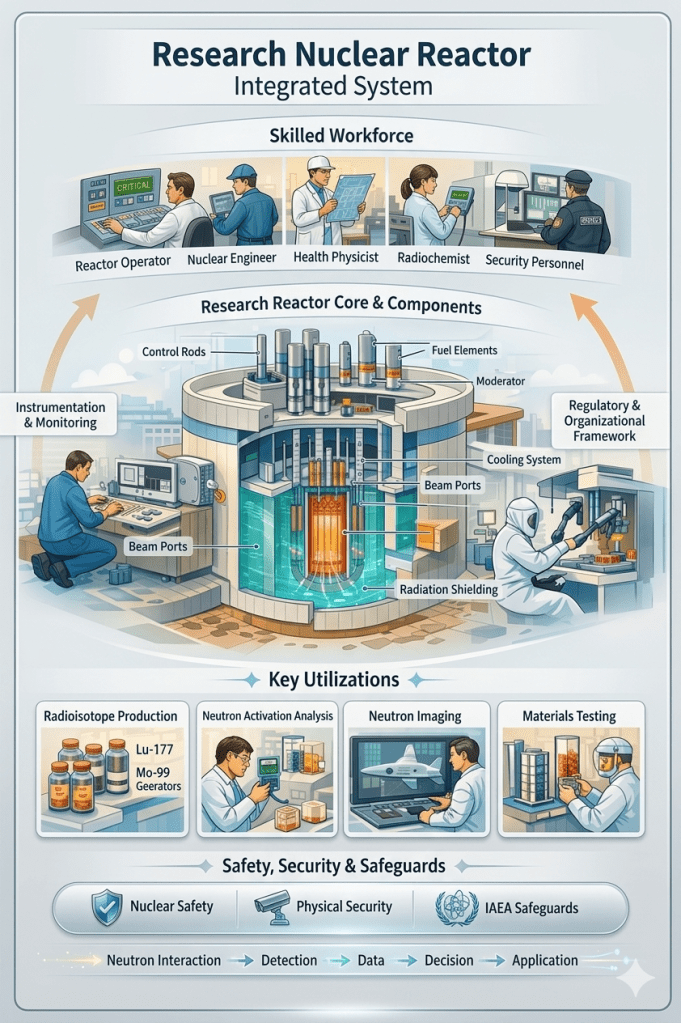
Research nuclear reactors (RRs) constitute a fundamental pillar of nuclear science and technology infrastructure. Unlike nuclear power reactors, which are primarily designed for electricity generation, research reactors are specifically developed to provide intense and controllable neutron fields for scientific, industrial, medical, and educational purposes. Consequently, their significance lies not in energy production, but rather in their capacity to transform microscopic nuclear interactions into macroscopic, actionable outcomes.
In this context, research reactors can be understood as knowledge-generating platforms, where neutron interactions are systematically harnessed through engineered systems and human expertise. Furthermore, their strategic importance is emphasized within international frameworks established by the International Atomic Energy Agency, which recognize RRs as essential infrastructures for human resource development, technology demonstration, and regulatory preparedness. Therefore, the operation of a research reactor inherently requires the integration of physical components, skilled workforce, advanced instrumentation, institutional organization, and regulatory oversight, forming a highly interconnected socio-technical system.
2. Core Components and Physical System Architecture
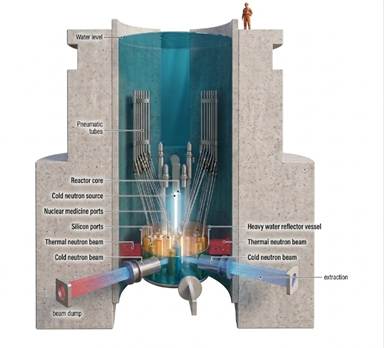
To begin with, the physical architecture of a research reactor is fundamentally governed by the requirement to achieve stable neutron production while maintaining operational flexibility and safety. Accordingly, each component is designed not in isolation, but as part of an interdependent system.
2.1 Reactor Core and Fuel System
At the center of the system lies the reactor core, which contains fissile material—typically low-enriched uranium (LEU)—arranged to optimize neutron economy and heat removal. When a neutron induces fission in U-235, energy and additional neutrons are released, thereby sustaining the chain reaction.
More specifically, the behavior of the neutron population is described by the effective multiplication factor (kₑff). When kₑff equals unity, the reactor operates in a steady-state condition; conversely, deviations from this value indicate subcritical or supercritical behavior. Thus, maintaining kₑff ≈ 1 is essential for stable operation, and this is achieved through precise control mechanisms discussed later.
2.2 Moderation and Neutron Spectrum Control
In order to enhance the probability of fission, fast neutrons must first be slowed down through interactions with a moderator. Materials such as light water, heavy water, or graphite are commonly employed for this purpose. As a result, the neutron spectrum is shifted toward thermal energies, which significantly increases the likelihood of subsequent fission events.
Moreover, depending on the intended application, reactor designs may be adjusted to provide thermal, epithermal, or fast neutron spectra, thereby enabling specialized applications such as neutron capture therapy or materials testing.
2.3 Reactivity Control and Shutdown Systems
While neutron production is essential, it must simultaneously be controlled with high precision. This is achieved through control rods composed of neutron-absorbing materials such as boron or cadmium. By inserting or withdrawing these rods, operators can regulate the neutron population and, consequently, reactor power.
Importantly, safety is further enhanced by inherent design features, such as negative temperature coefficients, which naturally reduce reactivity as temperature increases. In addition, emergency shutdown systems (SCRAM) ensure rapid insertion of control rods under abnormal conditions, thereby terminating the chain reaction.
2.4 Thermal-Hydraulic System
Although research reactors operate at lower power levels than power reactors, effective heat removal remains indispensable. Typically, pool-type reactors rely on natural convection, whereas higher-power systems may require forced circulation. Therefore, parameters such as coolant flow rate, heat transfer efficiency, and thermal margins must be carefully managed to ensure safe operation.
2.5 Shielding and Radiation Protection Design
Simultaneously, the reactor must be designed to protect both personnel and the environment from radiation exposure. This is achieved through layered shielding systems, where water serves as an effective neutron moderator and absorber, while concrete attenuates gamma radiation. Consequently, shielding design is intrinsically linked to both reactor physics and operational safety.
2.6 Experimental Access and Neutron Delivery
Finally, a defining feature of research reactors is their provision of direct experimental access. Through beam ports, irradiation channels, and sample insertion systems, neutron flux can be delivered to experimental setups. Therefore, the reactor is not merely a source of neutrons, but a platform for their controlled utilization.
3. Workforce Structure and Functional Roles
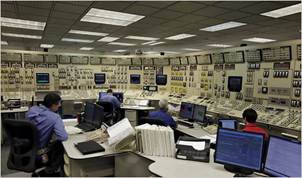
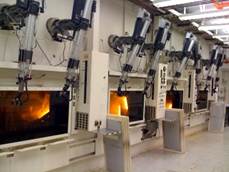
Having established the physical system, it is equally important to recognize that reactor operation is fundamentally dependent on human expertise. Indeed, without a competent workforce, even the most advanced reactor design cannot function effectively.
3.1 Reactor Operators and Physicists
First and foremost, reactor operators translate theoretical reactor physics into real-time operational control. They continuously monitor reactor parameters and adjust control systems to maintain criticality. Consequently, their role bridges the gap between theoretical models and practical operation.
3.2 Radiation Protection Specialists
In parallel, radiation protection professionals ensure that all activities comply with safety standards. Through continuous monitoring, dosimetry, and contamination control, they implement the ALARA principle, thereby minimizing radiation exposure.
3.3 Engineers and Technical Personnel
At the same time, engineers maintain the integrity of reactor systems. By performing preventive maintenance, calibrating instruments, and troubleshooting system failures, they ensure the reliability of both operational and safety systems.
3.4 Scientific Users
Meanwhile, researchers utilize the reactor’s neutron flux to conduct experiments. In doing so, they transform physical phenomena into scientific knowledge and technological innovation.
3.5 Radiochemists and Isotope Specialists
Furthermore, radiochemists operate within shielded environments to process irradiated materials. Their work ensures that radioisotopes meet stringent quality requirements for medical and industrial applications.
3.6 Security and Safeguards Personnel
Finally, security and safeguards personnel ensure that the facility operates in compliance with national and international regulations, thereby maintaining trust and preventing misuse.
4. Competency and Skill Framework
Building upon the workforce structure, it becomes evident that effective reactor operation requires a multi-dimensional competency framework.
To begin with, a strong scientific foundation in reactor physics and radiation interaction is essential. In addition, operational competence enables personnel to respond effectively to dynamic reactor conditions. Furthermore, analytical skills are required to interpret experimental data and assess uncertainties.
Equally important is regulatory awareness, as personnel must adhere to standards set by organizations such as the International Atomic Energy Agency. Ultimately, these competencies are unified by a strong safety culture, which ensures that safety considerations are prioritized in all decision-making processes.
5. Instrumentation and Measurement Systems
In order to translate radiation into usable information, research reactors rely on sophisticated instrumentation systems. These systems form the interface between physical phenomena and measurable data.
5.1 Neutron and Gamma Detection Systems
Neutron detectors, such as fission chambers and He-3 detectors, measure neutron flux, while gamma spectroscopy systems (NaI(Tl), HPGe) enable isotope identification. Thus, detection systems provide the fundamental data required for both operation and research.
5.2 Signal Processing Chain
However, raw detector signals must first be processed. This involves amplification, shaping, digitization, and spectral analysis. Through this chain, radiation events are converted into meaningful datasets.
5.3 Dosimetry and Monitoring Systems
Simultaneously, dosimetry systems monitor radiation exposure for both personnel and the environment. These systems ensure compliance with safety limits and provide feedback for operational decisions.
5.4 Digital and Advanced Systems
More recently, digital pulse processing and real-time analysis have enhanced measurement capabilities. Consequently, modern reactors increasingly integrate advanced data processing technologies.
6. Organizational and Institutional Framework
While technology and workforce are essential, they must operate within a structured organizational framework. Typically, research reactors are managed by national institutions such as the Thailand Institute of Nuclear Technology.
Internally, departments are organized according to function, including operations, safety, engineering, research, and isotope production. Externally, the reactor interfaces with regulatory bodies, universities, hospitals, and international organizations. Therefore, the reactor operates within a multi-layered governance system.
7. Utilization of Research Reactors
Having established the system, its ultimate purpose is realized through its diverse applications.
7.1 Radioisotope Production
Through neutron activation, stable isotopes are transformed into radioactive ones. For example:

This process enables targeted medical therapies, thereby linking nuclear physics to healthcare outcomes.
7.2 Neutron Activation Analysis
Similarly, NAA allows for highly sensitive elemental analysis. By correlating gamma emissions with specific elements, precise compositional information can be obtained.
7.3 Materials Irradiation
In addition, neutron irradiation induces defects in materials, allowing researchers to study radiation damage and develop advanced materials.
7.4 Neutron Beam Applications
Furthermore, neutron beams enable diffraction and imaging techniques, which are indispensable in materials science and engineering.
7.5 Education and Training
Equally important, research reactors serve as training platforms, ensuring the development of future nuclear professionals.
7.6 Advanced Applications
Finally, emerging applications such as BNCT and neutron transmutation doping illustrate the evolving role of research reactors.
8. Safety, Security, and Safeguards (3S Framework)
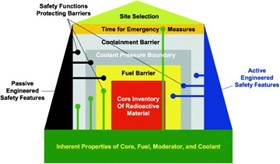
To ensure responsible operation, research reactors are governed by the integrated 3S framework.
8.1 Nuclear Safety
First, nuclear safety focuses on preventing accidental exposure through defense-in-depth and redundant systems.
8.2 Nuclear Security
Second, nuclear security addresses intentional threats through physical protection and cybersecurity measures.
8.3 Nuclear Safeguards
Finally, safeguards ensure that nuclear materials are not diverted for non-peaceful purposes, under verification by the International Atomic Energy Agency.
9. Integrated System Perspective
Bringing these elements together, a research reactor can be conceptualized as a transformation chain:

Importantly, this transformation is only possible through the integration of components, workforce, instrumentation, organizational structures, and regulatory frameworks.
10. Conclusion
In conclusion, research nuclear reactors represent far more than physical facilities; they are integrated socio-technical systems that convert nuclear phenomena into societal value. Their effectiveness depends on the seamless interaction between engineering systems, human expertise, and governance structures, all operating under strict safety, security, and safeguards principles.
Therefore, the true significance of research reactors lies not only in their technical capabilities but also in their role as enablers of knowledge, innovation, and sustainable nuclear development.
Table: Components of a Research Reactor and Their Functions and Material Properties
| Component | Function | Material Properties / Characteristics |
| Reactor Core | Region where fission reactions occur and neutrons are generated | Structurally stable, capable of accommodating fuel geometry, high radiation resistance |
| Nuclear Fuel (e.g., U-235 in LEU) | Produces energy and neutrons via fission reactions | High fissile content, good thermal conductivity, resistance to radiation damage |
| Fuel Cladding | Contains fission products and isolates fuel from coolant | Corrosion-resistant, low neutron absorption cross-section, e.g., Al alloys, Zr alloys |
| Moderator (Water, Heavy Water, Graphite) | Slows down fast neutrons to thermal energies | Low atomic mass (efficient slowing down), low neutron absorption, chemical stability |
| Coolant (Water, D₂O) | Removes heat from the reactor core | High heat capacity, good thermal conductivity, low neutron absorption |
| Control Rods (B, Cd, Hf) | Regulate reactivity and control reactor power | High neutron absorption cross-section, high temperature resistance, radiation stability |
| Reflector (Graphite, Be, Water) | Reflects neutrons back into the core to improve neutron economy | Low absorption, high scattering efficiency |
| Reactor Vessel / Pool Structure | Houses the core and coolant system | High mechanical strength, corrosion resistance, structural integrity under irradiation |
| Shielding (Water, Concrete, Lead) | Protects personnel and environment from radiation | Effective neutron attenuation (hydrogen-rich materials), gamma attenuation (high-Z materials such as Pb, concrete) |
| Beam Ports / Irradiation Channels | Deliver neutron flux to experimental setups | Optimized geometry, minimal neutron loss, radiation-resistant materials |
| Instrumentation & Detectors | Measure neutron flux, radiation levels, and system parameters | High sensitivity, radiation hardness, long-term stability (e.g., He-3 detectors, fission chambers, HPGe) |
| Cooling System (Pumps / Natural Circulation) | Maintains coolant flow and heat removal | High reliability, redundancy, resistance to radiation and thermal stress |
| Containment / Confinement System | Prevents release of radioactive materials to the environment | Airtight, high structural integrity, resistant to pressure and radiation |
| Emergency Shutdown System (SCRAM) | Rapidly terminates the chain reaction in emergency conditions | Fast response, fail-safe design, high neutron absorption materials |
เครื่องปฏิกรณ์นิวเคลียร์วิจัย (Research Nuclear Reactors)
1. บทนำ
เครื่องปฏิกรณ์นิวเคลียร์วิจัย (Research Reactors: RRs) ถือเป็นหนึ่งในโครงสร้างพื้นฐานหลักของวิทยาศาสตร์และเทคโนโลยีนิวเคลียร์ โดยแตกต่างจากเครื่องปฏิกรณ์นิวเคลียร์กำลัง ซึ่งมีวัตถุประสงค์หลักเพื่อการผลิตไฟฟ้า เครื่องปฏิกรณ์วิจัยถูกออกแบบขึ้นโดยเฉพาะเพื่อสร้างสนามนิวตรอนที่มีความเข้มสูงและสามารถควบคุมได้ สำหรับการใช้งานด้านวิทยาศาสตร์ อุตสาหกรรม การแพทย์ และการศึกษา
ดังนั้น ความสำคัญของเครื่องปฏิกรณ์วิจัยจึงไม่ได้อยู่ที่การผลิตพลังงาน แต่เป็นความสามารถในการแปลงการทำอันตรกิริยาระดับนิวเคลียส (microscopic nuclear interactions) ให้กลายเป็นผลลัพธ์เชิงประยุกต์ในระดับมหภาค (macroscopic, actionable outcomes)
ในบริบทนี้ เครื่องปฏิกรณ์วิจัยสามารถมองได้ว่าเป็น “แพลตฟอร์มการสร้างองค์ความรู้” ซึ่งการทำอันตรกิริยากับนิวตรอนถูกนำมาใช้ประโยชน์อย่างเป็นระบบผ่านโครงสร้างทางวิศวกรรมและความเชี่ยวชาญของบุคลากร นอกจากนี้ ความสำคัญเชิงยุทธศาสตร์ของเครื่องปฏิกรณ์วิจัยยังได้รับการย้ำในกรอบแนวทางระดับนานาชาติของ International Atomic Energy Agency ซึ่งระบุว่าเครื่องปฏิกรณ์วิจัยเป็นโครงสร้างพื้นฐานสำคัญสำหรับการพัฒนาทรัพยากรมนุษย์ การสาธิตเทคโนโลยี และความพร้อมด้านกฎระเบียบ
ดังนั้น การดำเนินงานของเครื่องปฏิกรณ์วิจัยจึงจำเป็นต้องอาศัยการบูรณาการระหว่างองค์ประกอบทางกายภาพ บุคลากรที่มีทักษะ เครื่องมือวัดขั้นสูง โครงสร้างองค์กร และการกำกับดูแลตามกฎหมาย ซึ่งรวมกันเป็นระบบสังคม-เทคนิค (socio-technical system) ที่มีความเชื่อมโยงกันอย่างซับซ้อน
2. องค์ประกอบหลักและโครงสร้างระบบทางกายภาพ
โดยพื้นฐานแล้ว โครงสร้างทางกายภาพของเครื่องปฏิกรณ์วิจัยถูกกำหนดโดยความต้องการในการสร้างนิวตรอนอย่างเสถียร ควบคู่ไปกับความยืดหยุ่นในการใช้งานและความปลอดภัยในการดำเนินงาน ดังนั้น องค์ประกอบแต่ละส่วนจึงไม่ได้ถูกออกแบบแบบแยกส่วน แต่เป็นส่วนหนึ่งของระบบที่พึ่งพาซึ่งกันและกัน
2.1 แกนปฏิกรณ์และระบบเชื้อเพลิง
ศูนย์กลางของระบบคือแกนปฏิกรณ์ (reactor core) ซึ่งประกอบด้วยวัสดุฟิชชัน เช่น ยูเรเนียมเสริมสมรรถนะต่ำ (LEU) ที่ถูกจัดเรียงเพื่อเพิ่มประสิทธิภาพของเศรษฐศาสตร์นิวตรอน (neutron economy) และการระบายความร้อน
เมื่อเกิดปฏิกิริยาฟิชชันของ U-235 จากการกระทบของนิวตรอน จะเกิดพลังงานและนิวตรอนเพิ่มขึ้น ซึ่งนำไปสู่การดำรงอยู่ของปฏิกิริยาลูกโซ่
พฤติกรรมของประชากรนิวตรอนถูกอธิบายด้วยตัวคูณการขยายผลเชิงประสิทธิผล (effective multiplication factor: kₑff) โดย
- keff = 1 → สภาวะวิกฤต (steady-state)
- keff < 1 → สภาวะต่ำกว่าวิกฤต (subcritical)
- keff > 1 → สภาวะเกินวิกฤต (supercritical)
ดังนั้น การควบคุมให้ keff ≈ 1 จึงเป็นหัวใจของการเดินเครื่องอย่างเสถียร
2.2 การหน่วงนิวตรอนและการควบคุมสเปกตรัม
เพื่อเพิ่มความน่าจะเป็นของการเกิดฟิชชัน นิวตรอนพลังงานสูงจำเป็นต้องถูกหน่วงให้ช้าลงผ่านตัวหน่วง (moderator) เช่น น้ำเบา น้ำหนักหนัก หรือกราไฟต์
ผลลัพธ์คือการเปลี่ยนสเปกตรัมของนิวตรอนไปสู่ช่วงพลังงานความร้อน (thermal) ซึ่งเพิ่มโอกาสในการเกิดฟิชชันอย่างมีนัยสำคัญ
นอกจากนี้ การออกแบบเครื่องปฏิกรณ์สามารถปรับให้เหมาะสมกับสเปกตรัมต่าง ๆ เช่น thermal, epithermal หรือ fast neutron เพื่อรองรับการใช้งานเฉพาะทาง เช่น การบำบัดด้วยนิวตรอน (BNCT) หรือการทดสอบวัสดุ
2.3 ระบบควบคุมรีแอกทิวิตีและการหยุดปฏิกรณ์
การผลิตนิวตรอนต้องควบคุมอย่างแม่นยำ โดยใช้แท่งควบคุม (control rods) ที่ทำจากวัสดุดูดกลืนนิวตรอน เช่น โบรอน หรือแคดเมียม
การเลื่อนเข้า–ออกของแท่งควบคุมช่วยปรับจำนวนประชากรนิวตรอน และกำลังของปฏิกรณ์
ด้านความปลอดภัย ยังมีคุณสมบัติแบบป้องกันโดยธรรมชาติ เช่น ค่าสัมประสิทธิ์อุณหภูมิลบ (negative temperature coefficient) ซึ่งทำให้รีแอกทิวิตีลดลงเมื่ออุณหภูมิเพิ่มขึ้น
และยังมีระบบหยุดฉุกเฉิน (SCRAM) ที่สามารถสอดแท่งควบคุมอย่างรวดเร็วเพื่อตัดปฏิกิริยาลูกโซ่ทันที
2.4 ระบบความร้อนและการไหล (Thermal-Hydraulics)
แม้เครื่องปฏิกรณ์วิจัยจะมีกำลังต่ำกว่าเครื่องปฏิกรณ์กำลัง แต่การระบายความร้อนยังคงมีความสำคัญ
- แบบสระน้ำ (pool-type) → ใช้การพาความร้อนตามธรรมชาติ
- กำลังสูง → ใช้ระบบไหลเวียนแบบบังคับ
ดังนั้น อัตราการไหลของสารหล่อเย็น ประสิทธิภาพการถ่ายเทความร้อน และขอบเขตความปลอดภัยทางความร้อน ต้องถูกควบคุมอย่างเข้มงวด
2.5 ระบบป้องกันรังสีหรือการกำบังรังสี (Shielding)
เครื่องปฏิกรณ์ต้องออกแบบให้ป้องกันบุคลากรและสิ่งแวดล้อมจากรังสี โดยใช้ระบบป้องกันหลายชั้น เช่น
- น้ำ → หน่วงและดูดกลืนนิวตรอน
- คอนกรีต → ลดทอนรังสีแกมมา
ดังนั้น การออกแบบระบบกำบังรังสีจึงเชื่อมโยงทั้งฟิสิกส์นิวเคลียร์และความปลอดภัย
2.6 ท่อใส่ตัวอย่างการทดลองและท่อนำส่งนิวตรอน
ลักษณะเฉพาะของเครื่องปฏิกรณ์วิจัยคือการเปิดให้เข้าถึงการทดลองโดยตรง เช่น
- beam ports
- irradiation channels
- ระบบใส่ตัวอย่าง
จึงทำให้เครื่องปฏิกรณ์เป็น “แพลตฟอร์มการใช้งานนิวตรอน” ไม่ใช่เพียงแหล่งกำเนิด
3. โครงสร้างบุคลากรและบทบาทหน้าที่
การดำเนินงานของเครื่องปฏิกรณ์ขึ้นอยู่กับความเชี่ยวชาญของมนุษย์อย่างยิ่ง
3.1 ผู้ควบคุมปฏิกรณ์และนักฟิสิกส์: ทำหน้าที่ควบคุมปฏิกรณ์แบบเรียลไทม์ เชื่อมโยงทฤษฎีกับการปฏิบัติ
3.2 ผู้เชี่ยวชาญด้านการป้องกันรังสี: ควบคุมความปลอดภัยโดยใช้หลัก ALARA
3.3 วิศวกรและช่างเทคนิค: ดูแลระบบ ตรวจสอบ ซ่อมบำรุง และสอบเทียบเครื่องมือ
3.4 นักวิจัย: ใช้ฟลักซ์นิวตรอนเพื่อสร้างองค์ความรู้
3.5 นักเคมีรังสี: แปรรูปไอโซโทปในสภาพแวดล้อมป้องกัน
3.6 เจ้าหน้าที่ความมั่นคงและการกำกับดูแล: ดูแล compliance และป้องกันการใช้ในทางที่ผิด
4. กรอบสมรรถนะและทักษะ (Competency and Skill Framework)
การดำเนินงานของเครื่องปฏิกรณ์อย่างมีประสิทธิภาพจำเป็นต้องอาศัยกรอบสมรรถนะ (competency framework) ที่มีลักษณะหลายมิติและบูรณาการเข้าด้วยกันอย่างเป็นระบบ
ประการแรก บุคลากรจำเป็นต้องมีพื้นฐานทางวิทยาศาสตร์ที่เข้มแข็ง โดยเฉพาะในด้านฟิสิกส์เครื่องปฏิกรณ์ (reactor physics) และอันตรกิริยาของรังสีกับสสาร (radiation interaction) ซึ่งเป็นรากฐานสำคัญสำหรับความเข้าใจพฤติกรรมของนิวตรอน กลไกการเกิดปฏิกิริยานิวเคลียร์ และการตอบสนองของระบบภายใต้สภาวะต่าง ๆ
นอกเหนือจากพื้นฐานทางทฤษฎีดังกล่าวแล้ว ความสามารถในการปฏิบัติงานจริง (operational competence) ก็มีความสำคัญอย่างยิ่ง เนื่องจากการเดินเครื่องเครื่องปฏิกรณ์ต้องเผชิญกับสภาวะที่เปลี่ยนแปลงตลอดเวลา บุคลากรจึงต้องสามารถตัดสินใจและตอบสนองต่อสถานการณ์แบบพลวัต (dynamic conditions) ได้อย่างถูกต้องและทันท่วงที
ในขณะเดียวกัน ทักษะด้านการวิเคราะห์ (analytical skills) ก็มีบทบาทสำคัญในการตีความข้อมูลจากการทดลองและระบบตรวจวัด โดยเฉพาะอย่างยิ่งในการประเมินความไม่แน่นอน (uncertainty) และความน่าเชื่อถือของข้อมูล ซึ่งเป็นพื้นฐานของการตัดสินใจเชิงวิศวกรรมและเชิงวิทยาศาสตร์
อีกทั้ง ความตระหนักและความเข้าใจในข้อกำหนดด้านกฎระเบียบ (regulatory awareness) ก็เป็นองค์ประกอบที่ขาดไม่ได้ เนื่องจากการดำเนินงานทั้งหมดต้องสอดคล้องกับมาตรฐานและข้อกำหนดที่กำหนดโดยองค์กรระดับสากล เช่น International Atomic Energy Agency รวมถึงหน่วยงานกำกับดูแลในระดับประเทศ
ท้ายที่สุด สมรรถนะทั้งหมดดังกล่าวจะถูกหลอมรวมภายใต้ “วัฒนธรรมความปลอดภัย” (safety culture) ซึ่งถือเป็นหลักการพื้นฐานที่กำหนดให้ความปลอดภัยเป็นสิ่งสำคัญสูงสุดในทุกกระบวนการตัดสินใจ ทั้งในระดับการปฏิบัติงานและระดับการบริหารจัดการ
ดังนั้น กรอบสมรรถนะและทักษะในบริบทของเครื่องปฏิกรณ์วิจัยจึงมิใช่เพียงการรวมกันของความรู้และทักษะเฉพาะด้านเท่านั้น หากแต่เป็นระบบบูรณาการที่เชื่อมโยงองค์ความรู้ การปฏิบัติ กฎระเบียบ และวัฒนธรรมความปลอดภัยเข้าด้วยกันอย่างเป็นเอกภาพ เพื่อให้สามารถดำเนินงานได้อย่างปลอดภัย มีประสิทธิภาพ และยั่งยืนในระยะยาว
5. ระบบเครื่องมือวัดและการตรวจวัด
ระบบเครื่องมือวัดเป็นตัวแปลงรังสีให้เป็นข้อมูล
5.1 เครื่องตรวจวัดนิวตรอนและแกมมา เช่น fission chamber, He-3, NaI(Tl), HPGe
5.2 สายโซ่ประมวลผลสัญญาณ: ขยาย → shaping → digitization → วิเคราะห์
5.3 ระบบปริมาณรังสีและการเฝ้าระวัง ตรวจวัดปริมาณรังสีบุคลากรและสิ่งแวดล้อม
5.4 ระบบดิจิทัล เช่น digital pulse processing
6. โครงสร้างองค์กร
เครื่องปฏิกรณ์มักอยู่ภายใต้หน่วยงานระดับชาติ เช่น สถาบันเทคโนโลยีนิวเคลียร์แห่งชาติ และมีหน่วยงานย่อย เช่น
- ฝ่ายปฏิบัติการเดินเครื่อง
- ควบคุมความปลอดภัย
- วิศวกรรม
- วิจัย
- ผลิตไอโซโทป
- การจัดการกากกัมมันตรังสี
7. การใช้งานเครื่องปฏิกรณ์วิจัย
7.1 การผลิตไอโซโทป เช่น Lu-176 → Lu-177 (สำหรับการรักษามะเร็ง)
7.2 การวิเคราะห์ธาตุ (NAA)
7.3 การฉายรังสีวัสดุ
7.4 ลำแสงนิวตรอน
7.5 การศึกษาและฝึกอบรม
7.6 การใช้งานขั้นสูง เช่น BNCT, neutron doping
8. กรอบ 3S (Safety, Security, Safeguards)
8.1 Nuclear Safety ป้องกันอุบัติเหตุ
8.2 Nuclear Security ป้องกันการก่อวินาศกรรม
8.3 Nuclear Safeguards ควบคุมการใช้วัสดุนิวเคลียร์
สรุปแนวคิดสำคัญของ “โครงสร้างความปลอดภัยแบบป้องกันหลายชั้น (Defense-in-Depth)” ในระบบนิวเคลียร์ โดยแสดงความเชื่อมโยงระหว่าง คุณสมบัติโดยกำเนิดของระบบ (inherent safety), ระบบวิศวกรรมเชิงรับและเชิงรุก (passive/active engineered safety features) และ แนวกั้นหลายชั้น (barriers) เพื่อป้องกันการแพร่กระจายของสารกัมมันตรังสี
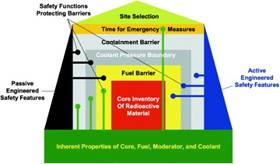
โดยแบ่งได้เป็นแต่ละส่วน ดังนี้
1. ชั้นล่างสุด: คุณสมบัติโดยกำเนิด (Inherent Safety)
บริเวณสีเขียวด้านล่างคือ“Inherent Properties of Core, Fuel, Moderator, and Coolant” หมายถึงคุณสมบัติทางฟิสิกส์และวัสดุที่ช่วยเพิ่มความปลอดภัยโดยธรรมชาติ เช่น ค่าสัมประสิทธิ์อุณหภูมิลบ (negative temperature coefficient) การหน่วงนิวตรอนตามธรรมชาติของ moderator คุณสมบัติการถ่ายเทความร้อนของ coolant
® ส่วนนี้ ไม่ต้องอาศัยการควบคุมจากมนุษย์หรือระบบใด ๆ เป็น “ความปลอดภัยเชิงธรรมชาติ (intrinsic safety)”
2. แนวกั้นหลายชั้น (Multiple Physical Barriers)
ตรงกลางภาพ (จากล่างขึ้นบน) แสดง แนวกั้น 4 ชั้นหลัก:
1) Fuel Barrier: ตัวเม็ดเชื้อเพลิงเอง (fuel matrix / cladding) เป็นด่านแรกที่กักเก็บผลิตผลฟิชชัน
2) Coolant Pressure Boundary : ท่อ ระบบหล่อเย็น และ pressure vessel ป้องกันไม่ให้สารกัมมันตรังสีรั่วออกจากระบบปฐมภูมิ
3) Containment Barrier : อาคาร containment เป็นแนวกั้นทางวิศวกรรมขั้นสุดท้าย
แนวคิดสำคัญ: แม้ชั้นหนึ่งล้มเหลว → ยังมีชั้นถัดไปป้องกันต่อ = redundancy + layered protection
3. Passive Engineered Safety Features (ซ้าย)
ด้านซ้าย (สีดำ) คือ“Passive Engineered Safety Features”
ตัวอย่าง: ระบบหล่อเย็นแบบ natural circulation, gravity-driven systems, heat removal โดยไม่ใช้ไฟฟ้า
จุดเด่น:ไม่ต้องใช้พลังงานภายนอก ทำงานได้แม้เกิด blackout
4. Active Engineered Safety Features (ขวา)
ด้านขวา (สีน้ำเงิน) คือ “Active Engineered Safety Features”
ตัวอย่าง: ปั๊มหล่อเย็น (pumps), ระบบฉีดน้ำฉุกเฉิน (ECCS), ระบบควบคุมอัตโนมัติ
ต้องอาศัย: ไฟฟ้า, ระบบควบคุม, การทำงานของอุปกรณ์
5. Fuel Inventory of Radioactive Material
บริเวณสีแดงตรงกลาง: แสดง แหล่งกำเนิดของสารกัมมันตรังสี ซึ่งเป็นสิ่งที่ต้องถูก “กักเก็บไว้” ภายใน barriers ทุกชั้น
® นี่คือ “hazard source” ของระบบทั้งหมด
6. Time for Emergency Measures (ด้านบน)
ส่วนบนสีเหลือง: “Time for Emergency Measures” หมายถึง: ระบบถูกออกแบบให้ “หน่วงเวลา” เพื่อให้ผู้ปฏิบัติงานสามารถตอบสนองได้ทัน เช่น: การชะลอการเพิ่มอุณหภูมิ การหน่วงการรั่วไหล
7. Site Selection (บนสุด)
ชั้นบนสุดคือ Site Selection หมายถึง: การเลือกที่ตั้งโรงงาน พิจารณาแผ่นดินไหว น้ำท่วม ประชากร
® เป็น “ด่านสุดท้ายระดับระบบ” ที่ช่วยลดผลกระทบต่อสังคม
8. ภาพรวมเชิงระบบ
ภาพนี้กำลังสื่อแนวคิดสำคัญว่า: ความปลอดภัยของระบบนิวเคลียร์ไม่ได้ขึ้นกับองค์ประกอบใดองค์ประกอบหนึ่ง แต่เกิดจากการซ้อนทับกันของหลายชั้น (multi-layer protection)
สามารถสรุปเป็นลำดับได้ว่า:
Inherent safety → Passive systems → Active systems → Physical barriers → Emergency response → Site protection
9. เชื่อมโยงกับเครื่องปฏิกรณ์วิจัย (RR)
ในบริบทของเครื่องปฏิกรณ์นิวเคลียร์วิจัย (Research Reactor) โดยเฉพาะเครื่องปฏิกรณ์แบบสระน้ำ (pool-type reactor) แนวคิดด้านความปลอดภัยถูกบูรณาการเข้าไปตั้งแต่ระดับการออกแบบเชิงกายภาพและคุณสมบัติวัสดุของระบบ กล่าวคือ โครงสร้างของเครื่องปฏิกรณ์ประเภทนี้อาศัยทั้ง คุณสมบัติความปลอดภัยโดยกำเนิด (inherent safety) และ ระบบวิศวกรรมเชิงรับ (passive safety features) เป็นพื้นฐานสำคัญในการควบคุมและลดความเสี่ยงจากการดำเนินงาน
น้ำซึ่งทำหน้าที่เป็นองค์ประกอบหลักของระบบ มีบทบาทหลายประการในเวลาเดียวกัน ทั้งในฐานะตัวหน่วงนิวตรอน (moderator) สารหล่อเย็น (coolant) และตัวกำบังรังสี (shielding medium) คุณสมบัติเหล่านี้ช่วยให้สามารถลดพลังงานของนิวตรอน ดูดซับความร้อนจากแกนปฏิกรณ์ และลดทอนรังสีที่แผ่ออกมาได้อย่างมีประสิทธิภาพ นอกจากนี้ การออกแบบแบบสระน้ำยังเอื้อให้เกิดการถ่ายเทความร้อนด้วยการพาความร้อนตามธรรมชาติ (natural convection) ซึ่งเป็นกลไกเชิงรับที่ไม่ต้องพึ่งพาระบบพลังงานภายนอก จึงเพิ่มความน่าเชื่อถือของระบบในสภาวะผิดปกติ
อีกประการหนึ่ง เครื่องปฏิกรณ์วิจัยมักมีระดับกำลังความร้อนที่ค่อนข้างต่ำเมื่อเปรียบเทียบกับเครื่องปฏิกรณ์กำลัง ส่งผลให้มี ขอบเขตความปลอดภัยทางความร้อน (thermal margin) ที่สูงกว่า กล่าวคือ ระบบสามารถรองรับความแปรผันของสภาวะการทำงานได้โดยไม่เข้าสู่สภาวะวิกฤตทางความร้อนอย่างรวดเร็ว ซึ่งเป็นปัจจัยสำคัญที่ช่วยลดความรุนแรงของอุบัติเหตุที่อาจเกิดขึ้น
แม้ว่าเครื่องปฏิกรณ์วิจัยจะถูกออกแบบให้เปิดโอกาสสำหรับการทดลองผ่านช่องทางต่าง ๆ เช่น beam ports หรือ irradiation channels เพื่อรองรับการใช้งานด้านวิจัยและการพัฒนาเทคโนโลยี แต่ในขณะเดียวกันก็ยังคงรักษา แนวกั้นทางกายภาพ (physical barriers) อย่างครบถ้วนตามหลักการความปลอดภัยเชิงลึก (defense-in-depth) เพื่อควบคุมการกักเก็บสารกัมมันตรังสีภายในระบบ
ด้วยเหตุนี้ เครื่องปฏิกรณ์นิวเคลียร์วิจัยจึงสามารถพิจารณาได้ว่าเป็นระบบที่มีลักษณะ “ปลอดภัยโดยการออกแบบ” (safe-by-design) กล่าวคือ ความปลอดภัยไม่ได้เป็นเพียงผลลัพธ์จากการควบคุมหรือการตอบสนองภายหลัง แต่เป็นคุณสมบัติที่ฝังอยู่ในโครงสร้างทางวิศวกรรม ฟิสิกส์ของระบบ และการเลือกใช้วัสดุตั้งแต่ต้น ซึ่งทำให้การดำเนินงานสามารถเป็นไปอย่างมีเสถียรภาพ เชื่อถือได้ และสอดคล้องกับหลักการความปลอดภัยนิวเคลียร์ในระดับสากล
9. มุมมองระบบบูรณาการ
เครื่องปฏิกรณ์นิวเคลียร์ โดยเฉพาะเครื่องปฏิกรณ์วิจัย สามารถอธิบายเชิงแนวคิดได้ในลักษณะของ “สายโซ่การแปลงสัญญาณและคุณค่า (transformation chain)” ซึ่งเริ่มต้นจากปรากฏการณ์ทางฟิสิกส์ระดับนิวเคลียส และสิ้นสุดที่การนำไปใช้ประโยชน์ในระดับสังคมและเทคโนโลยี กล่าวคือ กระบวนการทั้งหมดสามารถเรียบเรียงเป็นลำดับดังนี้:
“การทำอันตรกิริยาของนิวตรอน → การตรวจวัด → ข้อมูล → การตัดสินใจ → การใช้งาน”
ในขั้นแรก การทำอันตรกิริยาของนิวตรอน (neutron interaction) เป็นกระบวนการพื้นฐานที่เกิดขึ้นภายในแกนปฏิกรณ์ ซึ่งนิวตรอนทำปฏิกิริยากับสสาร เช่น การกระเจิง (scattering) การดูดกลืน (absorption) หรือการเกิดฟิชชัน (fission) ปรากฏการณ์เหล่านี้เป็นต้นกำเนิดของสัญญาณทางฟิสิกส์ที่สะท้อนสถานะของระบบ รวมถึงเป็นกลไกสำคัญที่ทำให้เกิดการใช้งานต่าง ๆ เช่น การผลิตไอโซโทปหรือการวิเคราะห์วัสดุ
ถัดมา สัญญาณที่เกิดขึ้นจะถูกแปลงผ่านกระบวนการ การตรวจวัด (detection) โดยอาศัยหัววัดรังสี (radiation detectors) และระบบอิเล็กทรอนิกส์ที่เกี่ยวข้อง ซึ่งทำหน้าที่เปลี่ยนพลังงานจากรังสีให้เป็นสัญญาณไฟฟ้าที่สามารถวัดและประมวลผลได้ ขั้นตอนนี้ถือเป็น “จุดเชื่อมต่อ” ระหว่างโลกของปรากฏการณ์ทางฟิสิกส์กับโลกของข้อมูลเชิงปริมาณ
เมื่อสัญญาณถูกตรวจวัดแล้ว จะเข้าสู่ขั้นของ ข้อมูล (data) ซึ่งเป็นผลลัพธ์จากการประมวลผลสัญญาณ เช่น การขยายสัญญาณ การจัดรูปคลื่น (pulse shaping) การแปลงเป็นดิจิทัล และการวิเคราะห์สเปกตรัม ข้อมูลเหล่านี้มีบทบาทสำคัญในการสะท้อนพฤติกรรมของระบบ ไม่ว่าจะเป็นฟลักซ์นิวตรอน ระดับพลังงาน หรือสถานะของวัสดุ
จากนั้น ข้อมูลที่ได้จะถูกนำไปใช้ในกระบวนการ การตัดสินใจ (decision-making) ซึ่งอาจอยู่ในรูปของการควบคุมการเดินเครื่องปฏิกรณ์แบบเรียลไทม์ การประเมินความปลอดภัย การวิเคราะห์ผลการทดลอง หรือการวางแผนเชิงวิศวกรรม โดยขั้นตอนนี้ต้องอาศัยทั้งแบบจำลองทางทฤษฎี ความเชี่ยวชาญของผู้ปฏิบัติงาน และกรอบกฎระเบียบที่เกี่ยวข้อง
สุดท้าย ผลของการตัดสินใจจะนำไปสู่ การใช้งาน (application) ซึ่งเป็นเป้าหมายปลายทางของระบบ เช่น การผลิตไอโซโทปทางการแพทย์ การวิเคราะห์องค์ประกอบของวัสดุ การพัฒนาเทคโนโลยีใหม่ หรือการสนับสนุนงานวิจัยและการศึกษา
ดังนั้น สายโซ่นี้สะท้อนให้เห็นว่า เครื่องปฏิกรณ์นิวเคลียร์วิจัยมิได้เป็นเพียงแหล่งกำเนิดนิวตรอนเท่านั้น หากแต่เป็นระบบบูรณาการที่ทำหน้าที่ “แปลง” ปรากฏการณ์ทางฟิสิกส์ให้กลายเป็นข้อมูล ความรู้ และการใช้งานที่มีคุณค่าในระดับสังคม โดยมีการเชื่อมโยงอย่างต่อเนื่องระหว่างฟิสิกส์ เครื่องมือวัด การวิเคราะห์ และการตัดสินใจในเชิงวิศวกรรมและนโยบาย
10. บทสรุป
เครื่องปฏิกรณ์วิจัยไม่ได้เป็นเพียงเครื่องจักร แต่เป็นระบบสังคม-เทคนิคที่เชื่อมโยง วิศวกรรม + บุคลากร + การกำกับดูแลภายใต้หลัก 3S ดังนั้น คุณค่าที่แท้จริงของเครื่องปฏิกรณ์วิจัยจึงอยู่ที่บทบาทในการสร้างองค์ความรู้ นวัตกรรม และการพัฒนานิวเคลียร์อย่างยั่งยืน
ตาราง: องค์ประกอบของเครื่องปฏิกรณ์นิวเคลียร์วิจัย หน้าที่ และคุณสมบัติวัสดุ
| องค์ประกอบ | หน้าที่ | คุณสมบัติวัสดุ / ลักษณะสำคัญ |
| แกนปฏิกรณ์ | เป็นบริเวณที่เกิดปฏิกิริยาฟิชชันและเป็นแหล่งกำเนิดนิวตรอน | มีความมั่นคงเชิงโครงสร้าง รองรับการจัดเรียงเชื้อเพลิงได้ดี ทนต่อรังสีสูง |
| เชื้อเพลิงนิวเคลียร์ (เช่น ยูเรเนียม-235) | ให้กำเนิดพลังงานและนิวตรอนจากปฏิกิริยาฟิชชัน | มีความสามารถในการแตกตัวสูง นำความร้อนได้ดี ทนความเสียหายจากรังสี |
| ปลอกหุ้มเชื้อเพลิง | กักเก็บผลิตผลฟิชชันและแยกเชื้อเพลิงออกจากสารหล่อเย็น | ทนการกัดกร่อน ดูดกลืนนิวตรอนต่ำ มีความแข็งแรงเชิงกล |
| สารหน่วงนิวตรอน (น้ำ น้ำหนักหนัก หรือกราไฟต์) | ลดพลังงานนิวตรอนเพื่อเพิ่มโอกาสการเกิดฟิชชัน | มวลอะตอมต่ำ ลดพลังงานนิวตรอนได้ดี ดูดกลืนนิวตรอนต่ำ มีเสถียรภาพทางเคมี |
| สารหล่อเย็น | ระบายความร้อนออกจากแกนปฏิกรณ์ | มีความจุความร้อนสูง นำความร้อนได้ดี ไม่ดูดกลืนนิวตรอนมาก |
| แท่งควบคุม | ควบคุมปริมาณนิวตรอนและกำลังของปฏิกรณ์ | ดูดกลืนนิวตรอนได้ดี ทนความร้อนและรังสี |
| ตัวสะท้อนนิวตรอน | สะท้อนนิวตรอนกลับเข้าสู่แกนปฏิกรณ์ | ดูดกลืนนิวตรอนต่ำ กระเจิงนิวตรอนได้ดี |
| โครงสร้างภาชนะหรือสระปฏิกรณ์ | รองรับแกนปฏิกรณ์และระบบหล่อเย็น | แข็งแรง ทนการกัดกร่อน และทนสภาพแวดล้อมรังสี |
| ระบบกำบังรังสี | ลดการแผ่รังสีออกสู่ภายนอก | วัสดุที่มีไฮโดรเจนสูงช่วยลดนิวตรอน และวัสดุความหนาแน่นสูงช่วยลดรังสีแกมมา |
| ช่องทางลำแสงและช่องฉายรังสี | ส่งนิวตรอนไปยังงานทดลองหรือการฉายรังสีตัวอย่าง | ออกแบบให้สูญเสียนิวตรอนน้อย และทนรังสีได้ดี |
| เครื่องมือวัดและหัววัดรังสี | ตรวจวัดนิวตรอน รังสีแกมมา และสถานะของระบบ | มีความไวสูง ทนรังสี และมีเสถียรภาพในการวัด |
| ระบบหล่อเย็น (การไหลเวียน) | ควบคุมการไหลของสารหล่อเย็นและการระบายความร้อน | มีความน่าเชื่อถือสูง ออกแบบให้มีระบบสำรอง และทนสภาวะรุนแรง |
| ระบบกักเก็บหรือป้องกันการรั่วไหล | ป้องกันการแพร่กระจายของสารกัมมันตรังสีสู่สิ่งแวดล้อม | มีความแน่นหนา ทนแรงดัน และทนรังสี |
| ระบบหยุดปฏิกิริยาฉุกเฉิน | หยุดปฏิกิริยานิวเคลียร์อย่างรวดเร็วเมื่อเกิดเหตุผิดปกติ | ตอบสนองรวดเร็ว ออกแบบให้ปลอดภัยโดยอัตโนมัติ และใช้วัสดุดูดกลืนนิวตรอนสูง |
 Around Radiation Detectors
ใส่ความเห็น