Functional Architecture of Radiation Protection Personnel in Graded Radiation Protection Systems
1. Introduction
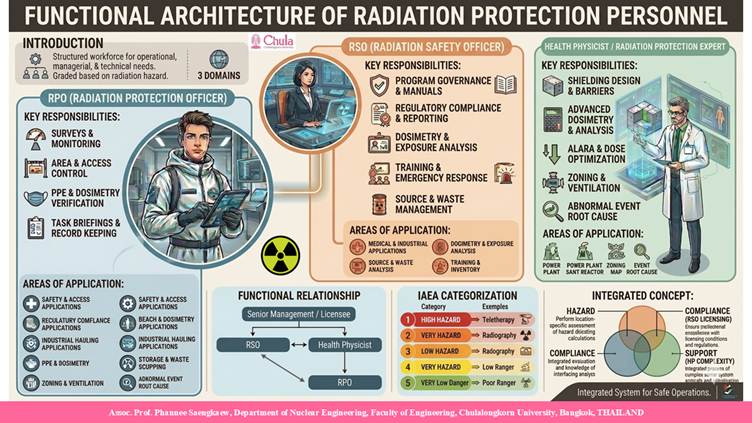
The safe utilization of ionizing radiation across medical, industrial, research, and nuclear power applications requires a comprehensive system that extends beyond regulatory compliance and instrumentation. Effective radiation protection is fundamentally dependent on the presence of a structured professional framework in which qualified personnel perform complementary functions across operational, managerial, and technical domains.
Internationally, radiation protection systems are implemented following a graded approach, in which the level of control, competency, and oversight is commensurate with the hazard and complexity of the radiation practice. Within this framework, three principal functional roles can be identified:
- Radiation Protection Officer (RPO) – responsible for operational implementation
- Radiation Safety Officer (RSO) – responsible for governance and regulatory compliance
- Health Physicist / Radiation Protection Expert – responsible for technical analysis, optimization, and scientific justification
These roles should not be interpreted as fixed hierarchical positions, but rather as interrelated functional domains that collectively form the architecture of a robust radiation protection system.
2. Radiation Protection Officer (RPO): Operational Implementation
2.1 Definition
The Radiation Protection Officer (RPO) is responsible for the direct implementation of radiation protection measures at the workplace level. This role is widely recognized in international guidance, including training frameworks provided by the International Atomic Energy Agency (IAEA).
The RPO functions as the operational execution layer, ensuring that radiation protection requirements are effectively applied in day-to-day activities.
2.2 Core Responsibilities
The responsibilities of the RPO include:
- Performing routine radiation and contamination surveys
- Monitoring and controlling access to controlled and supervised areas
- Verifying compliance with radiation work permits and procedures
- Ensuring correct use of personal protective equipment and dosimetry
- Providing task-specific radiation protection briefings
- Supporting contamination control and decontamination processes
- Maintaining operational radiation protection records
- Assisting in initial response to radiological incidents
2.3 Scope of Application
RPOs are commonly involved in:
- Diagnostic radiology and fluoroscopy
- Nuclear medicine preparation and dispensing
- Industrial X-ray systems
- Industrial radiography field operations
- Research laboratories using radionuclides
- Radioactive waste handling and storage
2.4 Competency Requirements
Effective RPO performance requires knowledge in:
- Radiation physics and interaction mechanisms
- Radiation detection and instrumentation
- External and internal exposure pathways
- Contamination monitoring and control
- Basic shielding principles
- Emergency response procedures
- Applicable regulatory requirements
3. Radiation Safety Officer (RSO): Governance and Compliance
3.1 Definition
The Radiation Safety Officer (RSO) is the formally appointed individual responsible for the overall management and regulatory compliance of the radiation protection program within an organization. In many jurisdictions, the RSO is a licensed or legally recognized position.
The RSO represents the governance and compliance layer, bridging operational activities with regulatory requirements.
3.2 Core Responsibilities
3.2.1 Program Management
- Development and maintenance of radiation safety manuals and procedures
- Implementation of ALARA (As Low As Reasonably Achievable) principles
- Establishment of institutional radiation protection policies
3.2.2 Regulatory Compliance
- Ensuring adherence to license conditions and regulatory requirements
- Preparation of regulatory reports and documentation
- Coordination with regulatory authorities
3.2.3 Monitoring and Surveillance
- Review of occupational dose records
- Investigation of abnormal exposures
- Evaluation of radiation protection program performance
3.2.4 Source and Equipment Control
- Maintenance of radioactive material inventory
- Oversight of source storage, transport, and disposal
- Supervision of leak testing and source integrity
3.2.5 Training and Emergency Preparedness
- Organization of radiation safety training programs
- Development of emergency response procedures
- Coordination of drills and incident investigations
3.3 Authority and Organizational Position
The RSO must have:
- Direct access to senior management
- Authority to suspend unsafe operations
- Independence from operational pressures
- Adequate resources to implement the radiation protection program
3.4 Thailand’s Graded RSO Licensing Framework
Thailand applies a graded RSO licensing system consistent with the IAEA graded competency approach:
| RSO Level | Authorized Scope |
| Junior RSO | Category 3–5 practices |
| Middle RSO | Up to Category 2 practices |
| Senior RSO | All categories |
This system ensures that regulatory authorization aligns with hazard level and operational complexity.
4. Health Physicist / Radiation Protection Expert: Technical Optimization
4.1 Definition
A Health Physicist is a specialist responsible for the scientific and engineering aspects of radiation protection, including analysis, design, optimization, and validation of radiation safety systems.
While the IAEA commonly uses functional terms such as radiation protection expert or qualified expert, the term Health Physicist remains widely used in professional practice, particularly in nuclear power and advanced radiation applications.
4.2 Core Responsibilities
4.2.1 Radiation Dosimetry
- External and internal dose assessment
- Bioassay interpretation
- Dose reconstruction and accident analysis
4.2.2 Shielding and Radiation Transport
- Shielding design and calculations
- Monte Carlo simulations
- Analysis of radiation streaming and skyshine
4.2.3 System Optimization
- ALARA optimization studies
- Source term evaluation
- Radiation zoning and facility design
- Ventilation and airborne contamination control
4.2.4 Technical Investigation
- Root cause analysis of radiological events
- Instrument calibration and metrology
- Performance evaluation of detection systems
4.3 Areas of Application
Health Physicists are essential in:
- Nuclear power plants
- Research reactors
- Accelerator and cyclotron facilities
- Fuel cycle installations
- High-activity irradiation facilities
- Decommissioning and waste management
5. Functional Relationship Among Roles
The relationship among RPO, RSO, and Health Physicist is best understood as functional rather than hierarchical.
Senior Management / License Holder
┌──────┴──────┐
RSO Health Physicist
RPO
- RPO → implements radiation protection in the field
- RSO → governs and manages the radiation protection system
- Health Physicist → provides advanced technical support
6. IAEA Categorization of Radioactive Sources
The IAEA categorizes sealed radioactive sources based on their potential hazard:
| Category | Hazard Level | Examples |
| 1 | Extremely Dangerous | Teletherapy, irradiators |
| 2 | Very Dangerous | Industrial radiography, HDR |
| 3 | Dangerous | Well logging, fixed gauges |
| 4 | Low Danger | Portable gauges |
| 5 | Very Low Danger | Check sources, XRF sources |
6.1 Important Limitation
IAEA categories:
Indicate hazard level only
Do not define staffing structures or personnel roles
7. Integrated Framework: Hazard, Authorization, and Technical Support
An effective radiation protection system integrates three dimensions:
| Dimension | Description |
| Hazard Level | Determined by source and practice risk |
| Regulatory Authorization | Determined by RSO licensing level |
| Technical Support | Determined by engineering and analytical complexity |
8. Conclusion
Radiation protection is inherently a multi-layered professional system, requiring coordination among operational, managerial, and technical personnel.
RPOs ensure radiation protection is implemented in practice.
RSOs ensure the system operates in compliance with regulatory requirements.
Health Physicists ensure the system is technically sound and optimized.
Effective radiation protection is achieved not through a single role, but through the integration of these complementary functions within a graded and well-structured organizational system.
*******************************************************************************************
สถาปัตยกรรมเชิงหน้าที่ของบุคลากรด้านการป้องกันรังสี ในระบบการกำกับดูแลความปลอดภัยทางรังสีแบบแบ่งระดับ
1. บทนำ
การดำเนินงานที่เกี่ยวข้องกับรังสีไอออไนซ์ในทางการแพทย์ อุตสาหกรรม งานวิจัย และโครงการนิวเคลียร์ ไม่สามารถอาศัยเพียงเครื่องมือตรวจวัดรังสีหรือข้อกำหนดทางกฎหมายเพียงอย่างเดียวในการรับประกันความปลอดภัยได้ หากแต่ต้องมี โครงสร้างบุคลากรด้านการป้องกันรังสีที่เหมาะสม ซึ่งทำหน้าที่ร่วมกันอย่างเป็นระบบในระดับปฏิบัติการ ระดับการกำกับดูแล และระดับสนับสนุนเชิงเทคนิค
ในทางปฏิบัติ ระบบการป้องกันรังสีขององค์กรสมัยใหม่มักประกอบด้วยบุคลากรหลัก 3 กลุ่มหน้าที่ ได้แก่
- เจ้าหน้าที่ป้องกันรังสี (Radiation Protection Officer: RPO)
- เจ้าหน้าที่ความปลอดภัยทางรังสี (Radiation Safety Officer: RSO)
- นักฟิสิกส์สุขภาพ / ผู้เชี่ยวชาญด้านการป้องกันรังสี
(Health Physicist / Radiation Protection Expert)
บทบาททั้งสามนี้ไม่ควรถูกตีความว่าเป็นลำดับชั้นตายตัวของตำแหน่งงาน หากแต่ควรถูกมองว่าเป็น กลุ่มหน้าที่เชิงวิชาชีพ (functional domains) ที่ทำงานร่วมกันภายในระบบการป้องกันรังสีแบบแบ่งระดับตามความเสี่ยงและความซับซ้อนของกิจกรรม
2. เจ้าหน้าที่ป้องกันรังสี (Radiation Protection Officer: RPO)
2.1 นิยาม
RPO คือบุคลากรที่รับผิดชอบการนำมาตรการป้องกันรังสีไปปฏิบัติจริงในระดับพื้นที่ปฏิบัติงานหรือระดับหน้างาน โดยทำหน้าที่เป็นผู้ควบคุมและติดตามให้ผู้ปฏิบัติงานดำเนินกิจกรรมทางรังสีอย่างปลอดภัยตามข้อกำหนดและระเบียบปฏิบัติที่กำหนดไว้
กล่าวได้ว่า RPO คือ Operational Execution Layer ของระบบการป้องกันรังสี
2.2 หน้าที่หลัก
- ตรวจวัดระดับรังสีและการปนเปื้อนในพื้นที่ปฏิบัติงาน
- ควบคุมการเข้าออกพื้นที่ควบคุม/พื้นที่เฝ้าระวัง
- ตรวจสอบการใช้เครื่องป้องกันส่วนบุคคลและเครื่องวัดปริมาณรังสีส่วนบุคคล
- กำกับการปฏิบัติตาม Radiation Work Permit / Procedure
- ให้คำแนะนำด้านความปลอดภัยก่อนเริ่มงาน
- สนับสนุนการควบคุมการปนเปื้อนและการกำจัดการปนเปื้อน
- จัดทำบันทึกการตรวจวัดและบันทึกปฏิบัติงานด้านรังสี
- ให้การตอบสนองเบื้องต้นในเหตุฉุกเฉินทางรังสี
2.3 ขอบเขตการใช้งานทั่วไป
RPO มักพบในงานประเภท:
- ห้องเอกซเรย์วินิจฉัย
- ห้องเตรียมสารเภสัชรังสี
- งาน Industrial Gauge / Portable Gauge
- งาน Industrial Radiography สนับสนุนภาคสนาม
- ห้องปฏิบัติการไอโซโทป
- พื้นที่จัดเก็บของเสียกัมมันตรังสี
3. เจ้าหน้าที่ความปลอดภัยทางรังสี (Radiation Safety Officer: RSO)
3.1 นิยาม
RSO คือบุคคลที่ได้รับการแต่งตั้งและ/หรือได้รับใบอนุญาตให้รับผิดชอบการกำกับดูแลระบบการป้องกันรังสีขององค์กรโดยรวม รวมถึงการควบคุมให้กิจกรรมทางรังสีทั้งหมดของหน่วยงานเป็นไปตามข้อกำหนดของกฎหมายและเงื่อนไขใบอนุญาต
RSO จึงเป็น Governance / Compliance Layer ของระบบการป้องกันรังสี
3.2 หน้าที่หลัก
การบริหารระบบความปลอดภัยทางรังสี
- จัดทำ/ปรับปรุงคู่มือและระเบียบปฏิบัติด้านรังสี
- กำหนดนโยบายและมาตรการ ALARA
- บริหารจัดการระบบความปลอดภัยทางรังสีขององค์กร
การกำกับดูแลเชิงกฎหมาย
- ควบคุมการดำเนินงานให้เป็นไปตามใบอนุญาต
- ประสานงานกับหน่วยงานกำกับดูแล
- เตรียมเอกสารและรายงานทางกฎหมาย
การเฝ้าระวังและตรวจสอบ
- ตรวจสอบผลโดสบุคลากร
- สอบสวนกรณีได้รับรังสีผิดปกติ
- ติดตามประสิทธิผลของโปรแกรมป้องกันรังสี
การควบคุมแหล่งกำเนิดรังสี
- ควบคุมบัญชีวัสดุกัมมันตรังสี
- ดูแลการเก็บรักษา การขนย้าย และการกำจัด
- ควบคุมการตรวจสอบ leak test / source integrity
การฝึกอบรมและเหตุฉุกเฉิน
- จัดอบรมผู้ปฏิบัติงานด้านรังสี
- จัดทำแผนตอบสนองเหตุฉุกเฉิน
- ประสานการซ้อมแผนและสอบสวนเหตุการณ์
3.3 ระบบแบ่งระดับใบอนุญาต RSO ของประเทศไทย
ประเทศไทยใช้ระบบใบอนุญาต RSO แบบแบ่งระดับ ดังนี้
| ระดับ | ขอบเขตที่อนุญาต |
| RSO ระดับต้น | ดูแลควบคุมสำหรับกลุ่มประเภท Category 3–5 |
| RSO ระดับกลาง | ดูแลควบคุมสำหรับกลุ่มประเภทได้ถึง Category 2 |
| RSO ระดับสูง | ดูแลควบคุมได้ทุกกลุ่มประเภท Category |
ระบบดังกล่าวเป็นการประยุกต์ใช้หลัก Graded Competency Approach ตามแนวคิดของ IAEA
4. นักฟิสิกส์สุขภาพ / ผู้เชี่ยวชาญด้านการป้องกันรังสี
(Health Physicist / Radiation Protection Expert)
4.1 นิยาม
นักฟิสิกส์สุขภาพ คือผู้เชี่ยวชาญที่รับผิดชอบด้านการวิเคราะห์ ออกแบบ ปรับเหมาะ และให้เหตุผลเชิงวิทยาศาสตร์/วิศวกรรมแก่ระบบการป้องกันรังสี โดยเฉพาะในกรณีที่มีความซับซ้อนทางเทคนิคสูง
แม้ IAEA มักใช้คำว่าRadiation Protection Expert / Qualified Expert / Technical Specialist
แต่ในวงการวิชาชีพ โดยเฉพาะด้านโรงไฟฟ้านิวเคลียร์และ Health Physics ยังคงใช้คำว่า Health Physicist อย่างแพร่หลาย
4.2 หน้าที่หลัก
การคำนวณและออกแบบเชิงวิศวกรรม
- การออกแบบกำบังรังสี
- Radiation Transport / Monte Carlo Analysis
- Shielding Optimization
การประเมินโดสขั้นสูง
- Internal Dosimetry
- Bioassay Interpretation
- Accident Dose Reconstruction
การวิเคราะห์และปรับเหมาะระบบ
- ALARA Optimization
- Source Term Analysis
- Radiation Zoning
- Ventilation / Airborne Contamination Design
การสนับสนุนเชิงเทคนิคพิเศษ
- วิเคราะห์สาเหตุเหตุการณ์ผิดปกติ
- พัฒนาระบบปรับเทียบ/Metrology
- ประเมินสมรรถนะเครื่องตรวจวัด
4.3 พื้นที่ใช้งานทั่วไป
- โรงไฟฟ้านิวเคลียร์
- เครื่องเร่งอนุภาค / Cyclotron
- เครื่องฉายรังสีพลังงานสูง
- Research Reactor
- Fuel Cycle Facility
- Gamma Irradiation Plant
- งาน Decommissioning
5. ความสัมพันธ์ของทั้งสามบทบาท
บทบาททั้งสามนี้ไม่ใช่ลำดับชั้นเชิงตำแหน่งโดยตรง แต่เป็นความสัมพันธ์เชิงหน้าที่มากกว่า
ผู้บริหาร / ผู้รับใบอนุญาต
┌────┴────┐
RSO Health Physicist
RPO
การตีความ
- RPO = ผู้ดำเนินการป้องกันรังสีในระดับหน้างาน
- RSO = ผู้กำกับดูแลและบริหารระบบป้องกันรังสี
- Health Physicist = ผู้สนับสนุนเชิงเทคนิค/วิศวกรรมขั้นสูง
6. การจัดประเภทแหล่งกำเนิดรังสีตาม IAEA
IAEA แบ่งแหล่งกำเนิดรังสีแบบปิดตามศักยภาพความเป็นอันตรายเป็น 5 ระดับ
| Category | ระดับอันตราย | ตัวอย่าง |
| 1 | อันตรายสูงมาก | Teletherapy, Irradiator |
| 2 | อันตรายสูง | Industrial Radiography, HDR |
| 3 | อันตราย | Well Logging, Fixed Gauge |
| 4 | อันตรายต่ำ | Portable Gauge |
| 5 | อันตรายต่ำมาก | XRF Source, Check Source |
หมายเหตุสำคัญ
IAEA Categories ใช้เพื่อ: แสดงระดับอันตรายของแหล่งกำเนิดรังสี
แต่: ไม่ได้ใช้กำหนดโครงสร้างบุคลากรโดยตรง
7. แนวคิดบูรณาการ: Hazard – Authorization – Technical Support
ระบบป้องกันรังสีที่เหมาะสมต้องพิจารณา 3 มิติร่วมกัน
- Hazard Level ระดับอันตรายของแหล่งกำเนิด/กิจกรรม
- Regulatory Authorization ระดับใบอนุญาต/สมรรถนะของ RSO
- Technical Support Need ความซับซ้อนเชิงวิศวกรรม/วิทยาศาสตร์ของกิจกรรม
8. สรุป
ระบบการป้องกันรังสีไม่ใช่หน้าที่ของบุคคลเพียงคนเดียว แต่เป็นระบบบูรณาการของบุคลากรหลายระดับที่ทำงานร่วมกันเพื่อเชื่อมโยง:
- การปฏิบัติหน้างาน
- การกำกับดูแลเชิงระบบ
- การสนับสนุนเชิงวิศวกรรมและวิทยาศาสตร์
RPO ทำให้มาตรการป้องกันรังสีถูกนำไปปฏิบัติจริง
RSO ทำให้ระบบป้องกันรังสีขององค์กรถูกกำกับอย่างเป็นระบบ
Health Physicist ทำให้ระบบดังกล่าวมีความถูกต้องและเหมาะสมเชิงเทคนิค
 Around Radiation Detectors
ใส่ความเห็น